
Direct-to-Film, Sublimation, and Screen Printing: Which Custom Apparel Method Stands the Test of Time?

When you're investing in custom apparel, you want it to last. Whether you're ordering team uniforms, promotional shirts for your business, or spirit wear for a school fundraiser, nobody wants their design falling apart after a few trips through the washing machine.
With so many printing methods available today, it can be tough to know which one will give you the best bang for your buck. Let's break down three of the most popular options: Direct-to-Film (DTF), Sublimation, and Screen Printing. By the end of this post, you'll know exactly which method is right for your project: and why screen printing often comes out on top for durability.
What Are These Printing Methods Anyway?
Before we dive into the durability showdown, let's quickly explain what each method actually does.
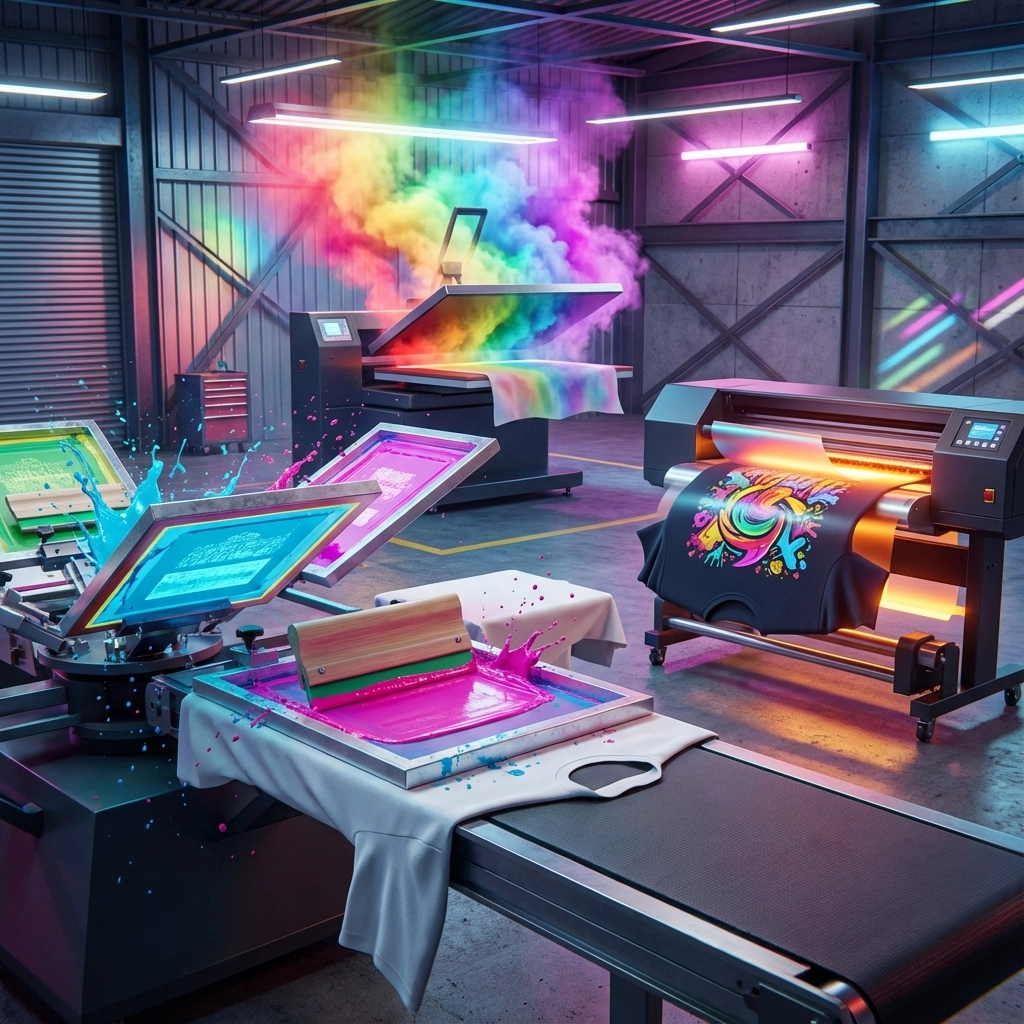
Screen Printing is the OG of custom apparel. It uses screens (like stencils) to push ink through onto fabric. Each color needs its own screen, which is why it's most cost-effective for larger orders. The ink sits on top of the fabric and soaks in, creating a bond that's built to last.
Direct-to-Film (DTF) is the new kid on the block. A design is printed onto a special film, then transferred to your garment using heat and pressure. It's super versatile: you can print on almost any fabric type and color.
Sublimation is a bit like magic. Special dyes are heated until they turn into gas, then they literally become part of the fabric fibers. The catch? It only works on polyester or specially coated materials, and it shows up best on light-colored fabrics.
The Durability Breakdown: How Long Will Your Design Last?
Here's where things get interesting. Each method handles wear and tear very differently.
Screen Printing: The Durability Champion
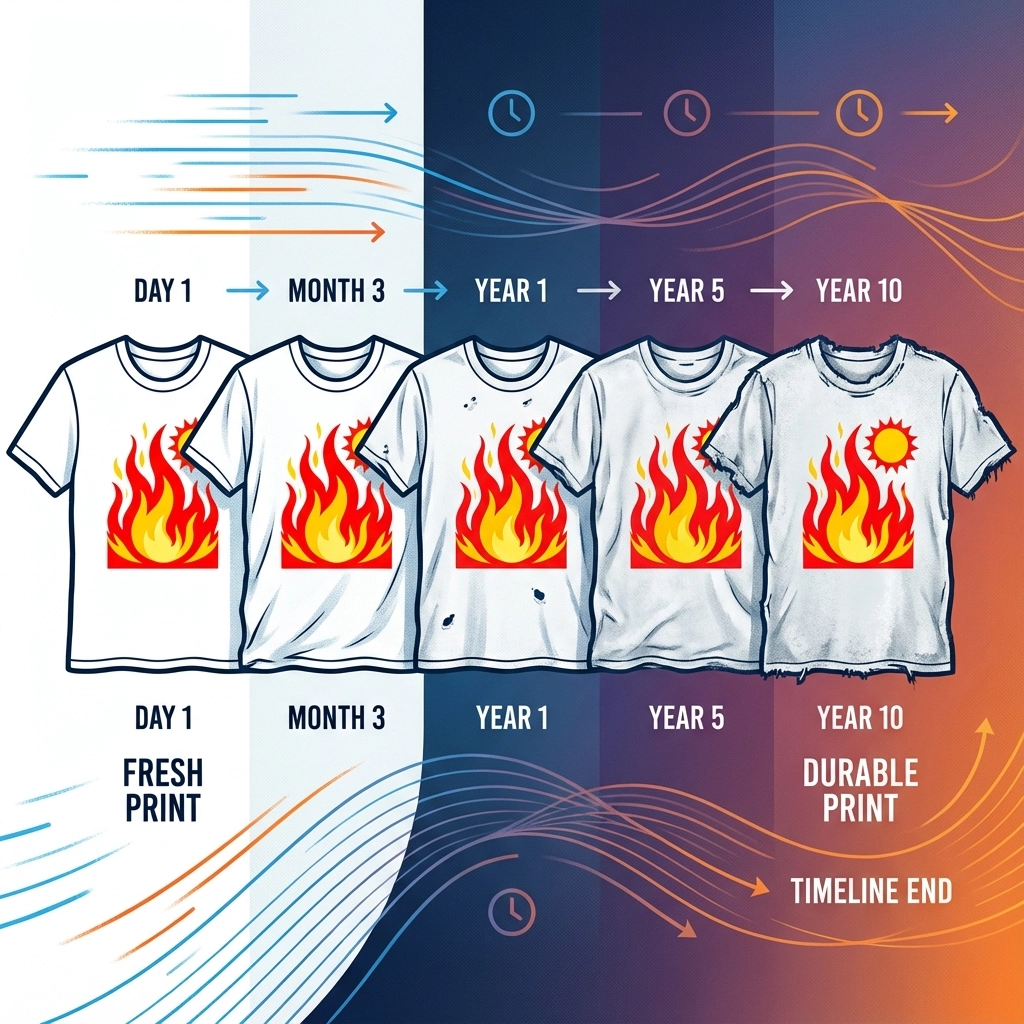
Screen printing has been the gold standard for custom apparel for decades, and there's a good reason why. When done properly, screen-printed designs can last for years: sometimes outlasting the garment itself.
The secret is in how the ink bonds with the fabric. Screen printing ink doesn't just sit on top like a sticker; it actually penetrates the fibers and creates a permanent bond. This means your design becomes part of the shirt, not just something stuck onto it.
Here's what makes screen printing so durable:
Deep ink penetration: The ink soaks into the fabric fibers
Chemical bonding: Proper curing creates a permanent bond
Thick ink coverage: More ink means better coverage and longevity
Proven track record: Decades of testing in real-world conditions
We've seen screen-printed shirts that are 10+ years old and still look great. Sure, they might show some general wear from the fabric itself, but the design stays intact.
Direct-to-Film: Great for Events, Not So Great for the Long Haul
DTF has some real advantages: it's versatile, works on dark fabrics, and perfect for smaller runs. But when it comes to durability? That's where things get tricky.
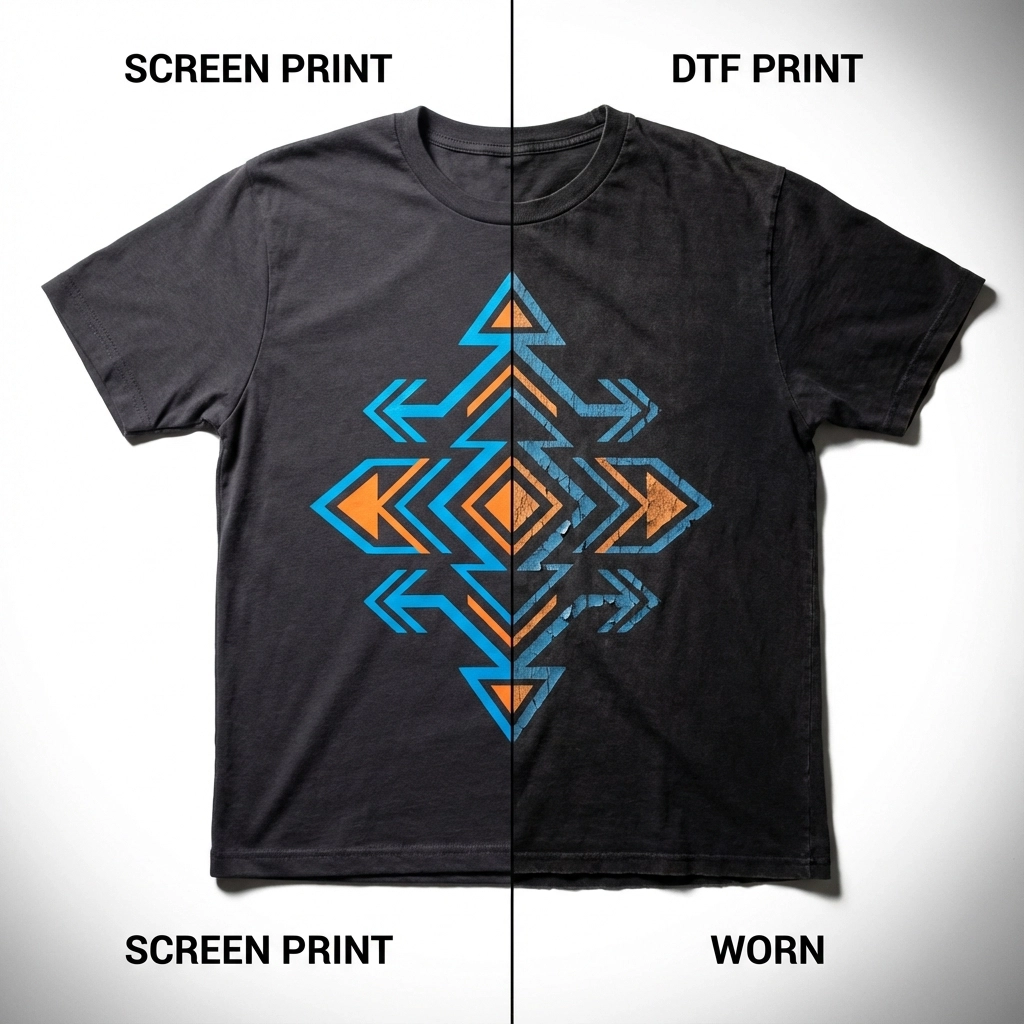
DTF transfers essentially create a layer on top of your fabric. Think of it like a really advanced iron-on transfer. While modern DTF can look fantastic when it's fresh, that layer can start to break down with repeated washing and wearing.
Here's what we've noticed with DTF:
Peeling: The edges can start to lift after multiple washes
Cracking: Stretching and folding can cause the transfer to crack
Texture changes: The print area can become stiff or plasticky over time
Color fading: Not as resistant to UV and washing as screen printing
Don't get us wrong: DTF isn't terrible. It's actually perfect for one-time events like company picnics, graduation parties, or family reunions where you need the shirt to look good for a day or weekend. But if you're looking for something that'll still look great after 50 washes? Screen printing is your better bet.
Sublimation: Amazing... When It Works
Sublimation can be incredibly durable because the design literally becomes part of the fabric. There's no layer that can peel or crack because the dyes have bonded at a molecular level with the polyester fibers.
The problem? It's super limited in what it can do:
Polyester only: Works best on 100% polyester (some poly blends work, but results vary)
Light colors only: Can't print on dark fabrics effectively
Limited fabric types: Forget about cotton, canvas, or other popular materials
So while sublimation can last forever on the right materials, most custom apparel projects need the flexibility to work on different fabric types and colors. That's where sublimation falls short.
Real-World Performance: What We See in Our Shop
After years of working with all three methods at Fresh Press Threads, here's what we've observed:
Screen printing jobs come back to us for reorders, not repairs. Customers love how their designs hold up wash after wash. We've had schools order the same screen-printed design year after year because their older shirts still look great.
DTF orders tend to be for short-term needs. Event planners love DTF for festivals or conferences because it's quick and flexible. But we rarely see DTF customers coming back for the same design on the same garment: they're usually moving on to something new.
Sublimation work is fantastic for specialized items like sports jerseys, mouse pads, and promotional items where polyester makes sense. But for everyday apparel like t-shirts and hoodies? The fabric limitations make it tough to recommend.
Cost vs. Value: The Long-Term Picture
Here's something most people don't consider: cost per wear.
A DTF shirt might be cheaper upfront, especially for small quantities. But if it starts looking rough after 10 washes, you're getting less value than a screen-printed shirt that still looks great after 50 washes.
Screen printing typically costs more per piece for small orders (because of the setup involved), but the per-piece cost drops significantly with larger quantities. More importantly, you're getting a product that maintains its appearance much longer.
Think of it like buying a car. You could get a cheaper car that breaks down in two years, or invest a bit more in something reliable that'll serve you well for a decade. Screen printing is the reliable option in the custom apparel world.
When to Choose Each Method
Choose Screen Printing When:
You want maximum durability
You're ordering 24+ pieces (where setup costs make sense)
You need the design to last through heavy use
You're printing on cotton or cotton blends
Color matching is important
Choose DTF When:
You need just a few pieces
It's for a one-time event
You need full-color photographic prints
You're working with an unusual fabric type
Quick turnaround is essential
Choose Sublimation When:
You're printing on polyester athletic wear
The design covers most of the garment
You need the softest hand feel possible
Color vibrancy is more important than fabric versatility
The Bottom Line on Durability
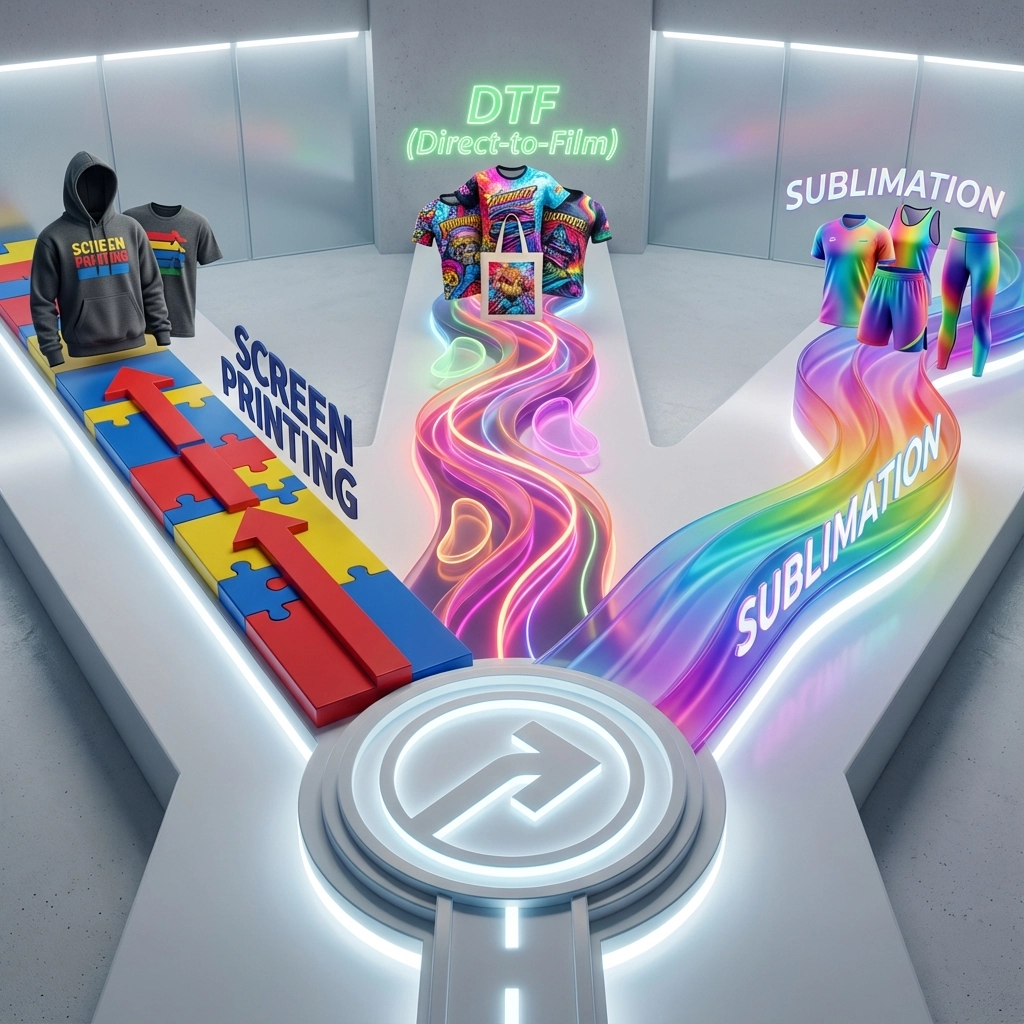
While each printing method has its place, screen printing consistently delivers the best long-term durability for most custom apparel projects. The combination of deep ink penetration, chemical bonding, and decades of proven performance makes it the smart choice when you want your investment to last.
DTF and sublimation both have their strengths, but they're more specialized tools. DTF excels for short-term, small-quantity needs, while sublimation shines on polyester sportswear and specialty items.
Making the Right Choice for Your Project
Still not sure which method is right for your project? That's what we're here for. At Fresh Press Threads, we've worked with thousands of customers to find the perfect printing method for their needs and budget.
Whether you're planning a corporate event, outfitting a sports team, or creating promotional merchandise, we can help you choose the method that'll give you the best results. Get in touch with us for a consultation, or request a quote to see how we can bring your vision to life with the durability it deserves.
Remember: cheap isn't always better when it comes to custom apparel. Invest in screen printing for designs that'll stand the test of time: your future self (and your budget) will thank you.
Comments